
FROM THE ENGLISH BOOK
A laboratory layout is part of the measurement system. Gas handling, clean connections and equipment access affect whether a small leak can be detected repeatably.
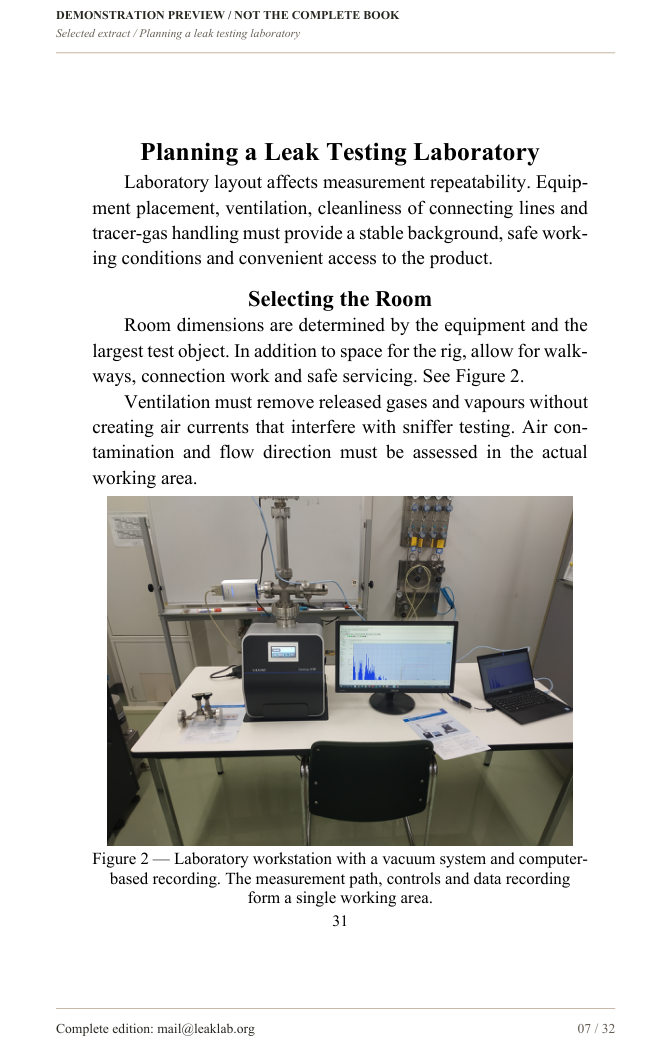
Arrange the station around the work sequence
Allow space for delivery of the largest product, fixture assembly, connection, testing and maintenance. Keep controls and service points accessible. Position the product so that the measurement line is short and does not load its ports. Separate clean fixtures from used or contaminated materials.
For sensitive vacuum testing, use short, clean lines with adequate conductance. Use polymer hoses only where their strength, outgassing and permeation are suitable for the required detection limit, and verify the complete connected system.
Separate helium supply, measurement and discharge
Helium released while filling a product or discharged by a pump can raise the background at the measurement station. Route exhaust to the designated discharge point or recovery system, respecting the pump's permissible backpressure. Prevent gas from returning through room ventilation intakes, venting lines or gas-ballast connections.
An oil-mist separator captures aerosol; it does not remove helium. Supply dry, clean venting or purge gas only through the ports and at the conditions specified by the equipment manufacturer. Nitrogen handling must account for oxygen displacement.
Check readiness under actual conditions
Assess both the background level and its variation over a test. After a release, identify the source, ventilate and wait for recovery before verifying detection capability. Demonstrate the response to a check leak with the normal equipment and ventilation sequence operating.
Provide electrical protection, controlled depressurisation, guarding and emergency procedures according to the installation design and applicable requirements. After an interruption, check vacuum conditions, retained settings, background and check-leak response before resuming measurements.
Adapted from English book preview · pages 7–17; original pages 31–41. This online article is an edited summary of selected material.