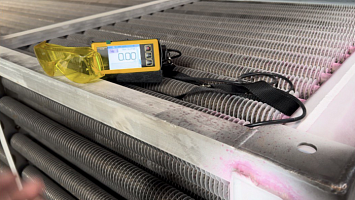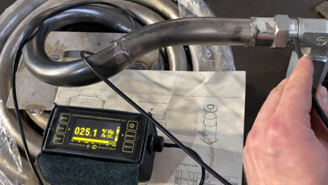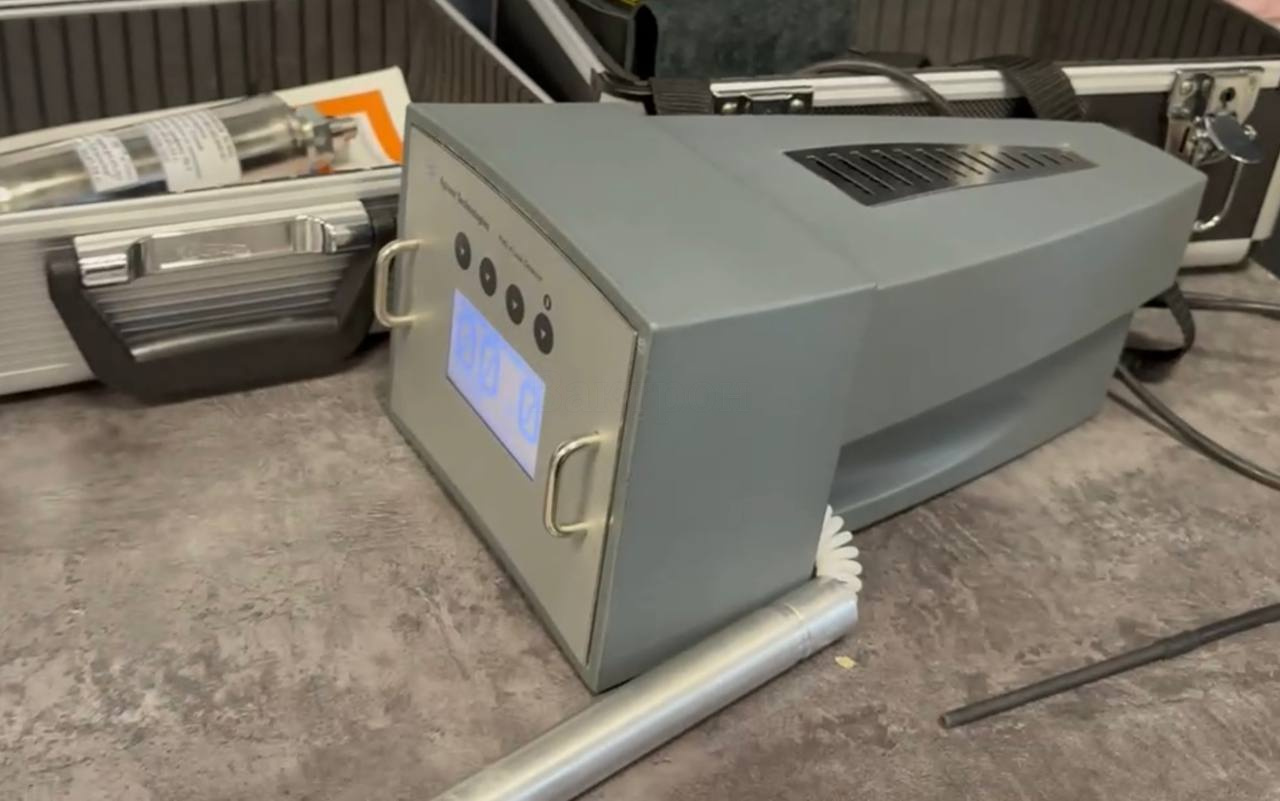

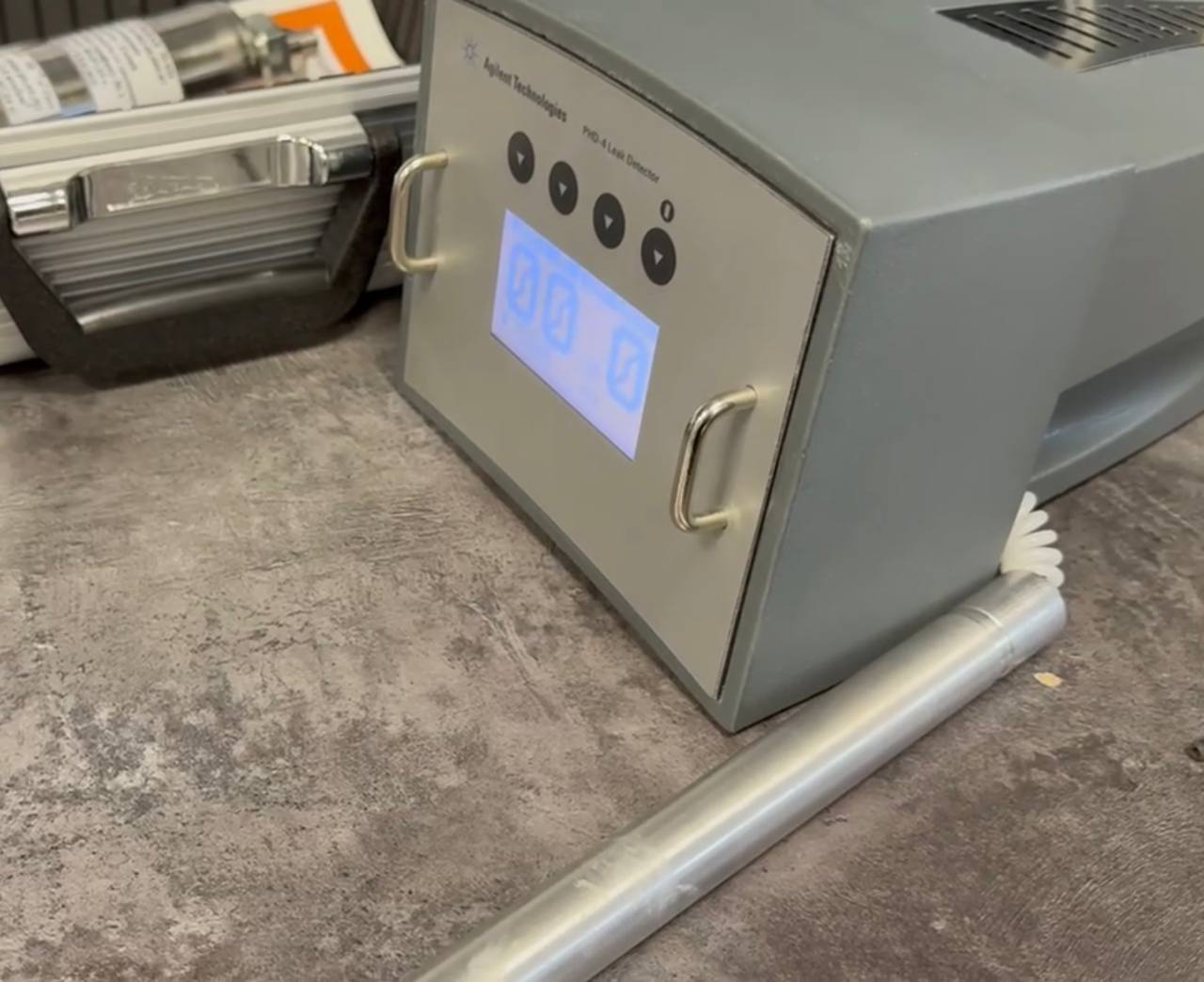


Portable battery-powered helium sniffer with SIPD selective detection, sensitivity down to 2 ppm helium and a minimum detectable leak rate of 5 × 10⁻⁷ Pa·m³/s. The 2.6 kg instrument starts in about three minutes and operates for up to four hours on a fully charged battery.
Description
Agilent PHD-4 Portable Helium Sniffer Leak Detector
The PHD-4 is a compact sniffer instrument for locating helium escaping from pressurized components and systems. Agilent SIPD (Selective Ion Pump Detection) technology provides helium selectivity without a mass spectrometer. Automatic start-up, self-test, tuning and background suppression support field and production use.
| Lowest detectable helium concentration | 2 ppm |
|---|---|
| Minimum detectable leak | 5 × 10⁻⁶ mbar·l/s; 5 × 10⁻⁷ Pa·m³/s |
| Response time | <2 s |
| Recovery time | <10 s from 50 ppm to 0 ppm |
| Start-up time | Approximately 3 min, including self-test |
| Reading drift | Maximum 10 ppm per 10 min |
| Indication and interfaces | Graphical display, variable-frequency audible signal, RS-232 and analog output |
| Power | 12 V DC from the battery pack, vehicle battery or transformer; supplied transformer input 110–240 V AC, 50–60 Hz |
| Battery operation | Up to 4 h on a full charge |
| Operating conditions | +5 to +35 °C; relative humidity up to 90%, non-condensing |
| Weight | 2.6 kg including battery |
| Dimensions | Approximately 170 × 136 × 290 mm |
Application
The PHD-4 is used in the positive-pressure sniffer method: the test object is filled or pressurized with a helium-containing tracer gas, and the probe is moved along potential leak locations. The achievable system-level test sensitivity depends on the tracer concentration, pressure, probe technique, ventilation and background helium.
Configuration
Agilent lists basic package 9694600 and complete package 9694640. Package contents and availability vary by ordering code. Confirm whether the required quotation includes the probe set, spare battery, travel case, charger, carrying strap, I/O connector, filters and current English documentation.
Pressurization and tracer-gas work must follow the applicable pressure-equipment rules and the manufacturer's instructions. Final acceptance limits and test procedure should be defined for the actual component and operating conditions.