DESIGNED, BUILT AND TESTED BY LEAKLAB
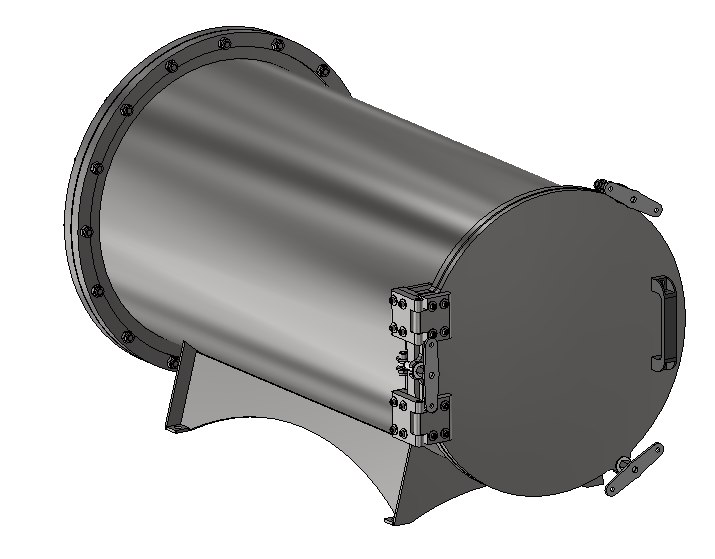
LeakLab D500 L1000 high-vacuum test system
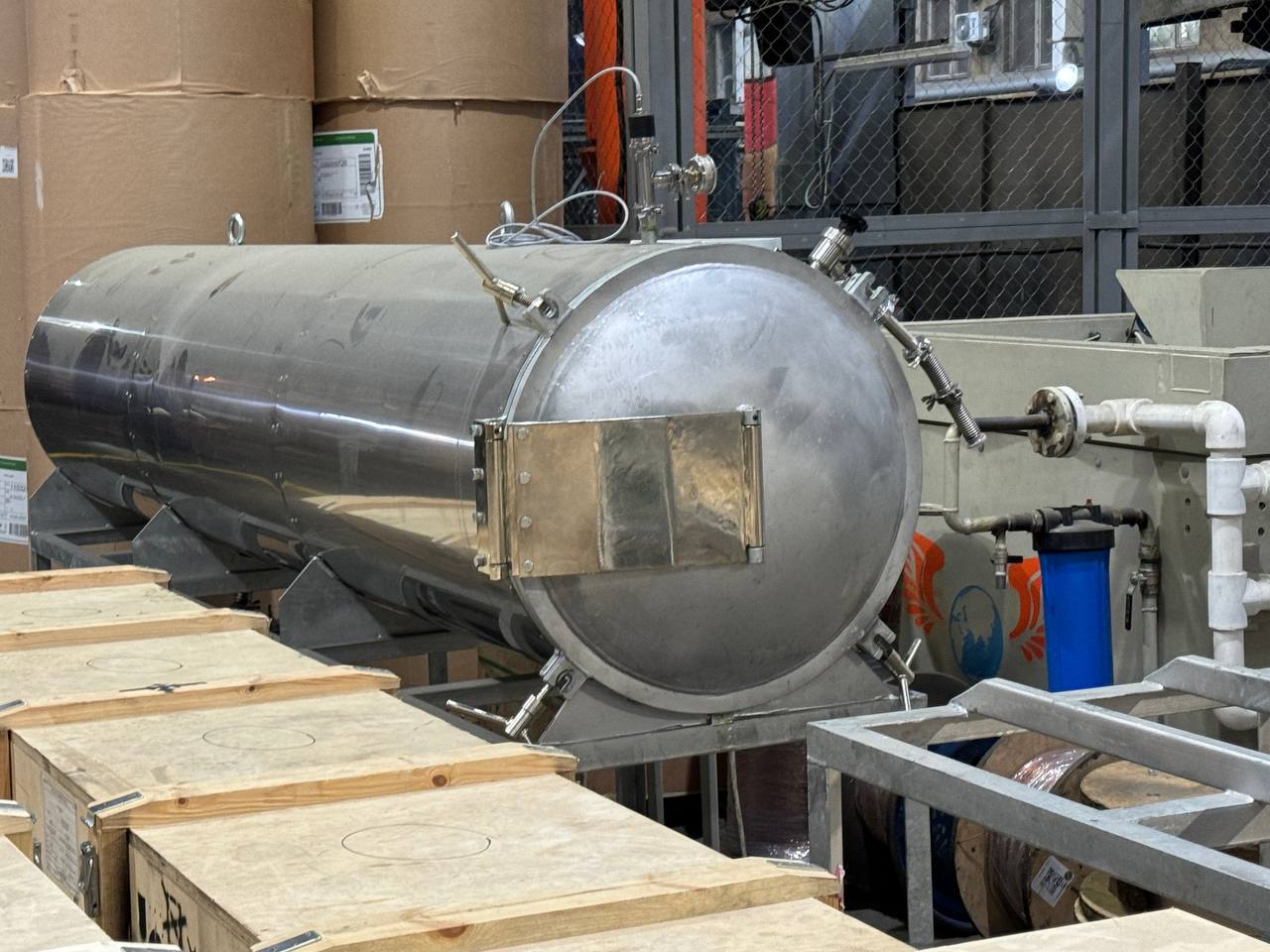
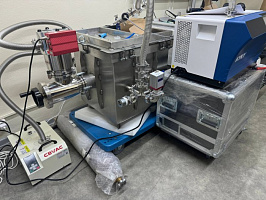
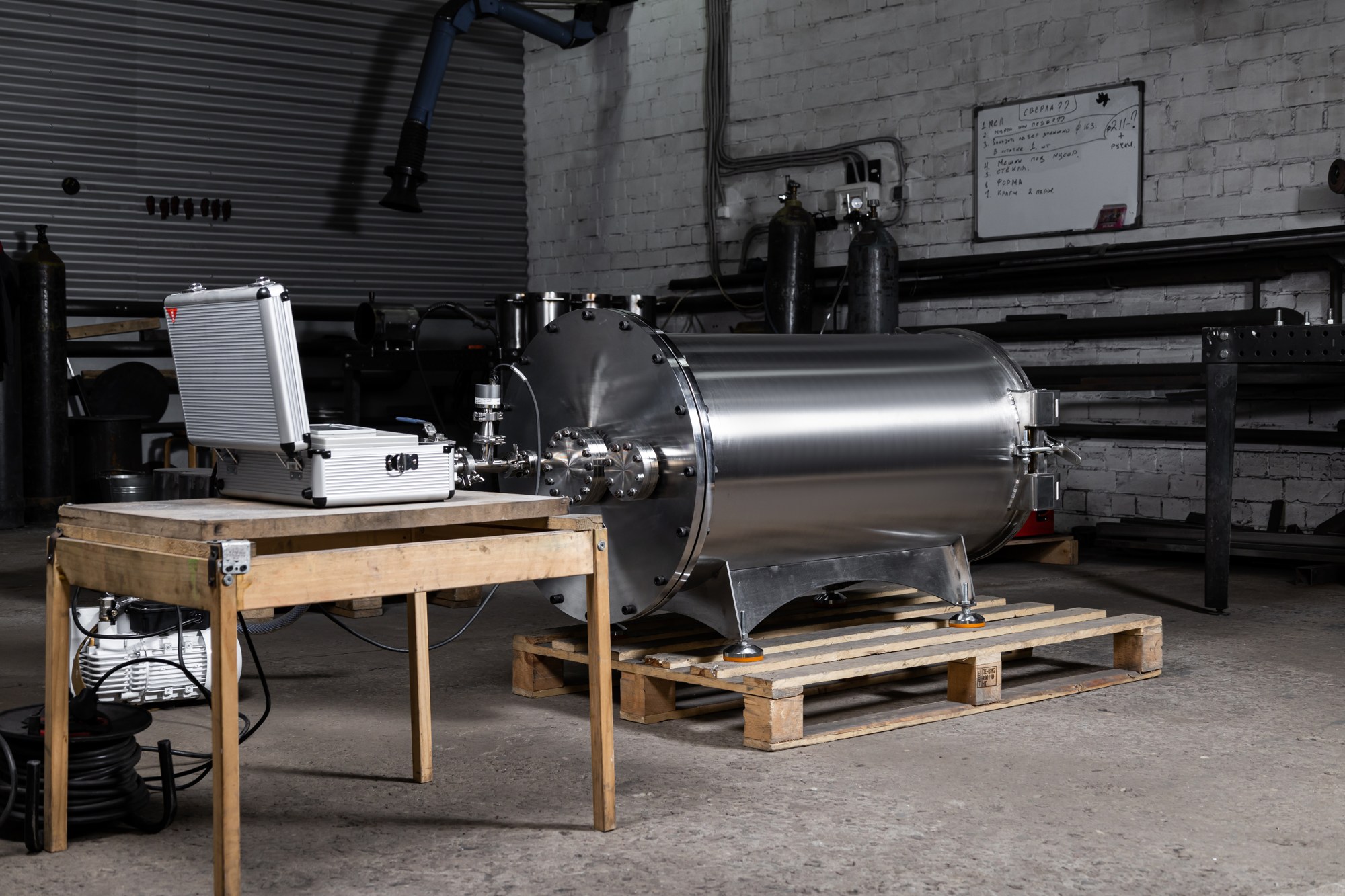
A complete test system combines a nominal 500 mm diameter × 1000 mm long chamber, dry pumping, AGP4000 pressure measurement and OWEN PR225 cycle control. A demonstration system has been built, equipped with pumps and is available for an arranged demonstration.
According to the manufacturer, a residual pressure of ≤ 1×10⁻⁶ Pa was achieved in the prepared demonstration configuration. This result describes that configuration and its preparation conditions. The pump model, usable envelope, fixtures, feedthroughs and acceptance programme for a supplied system are defined in the project specification.
System specification
| Assembly | Configuration and conditions |
|---|---|
| Chamber | Nominal diameter 500 mm; length 1000 mm. Usable space depends on the loading opening, fixtures and port intrusions. |
| Residual pressure | ≤ 1×10⁻⁶ Pa reported for the prepared demonstration system. |
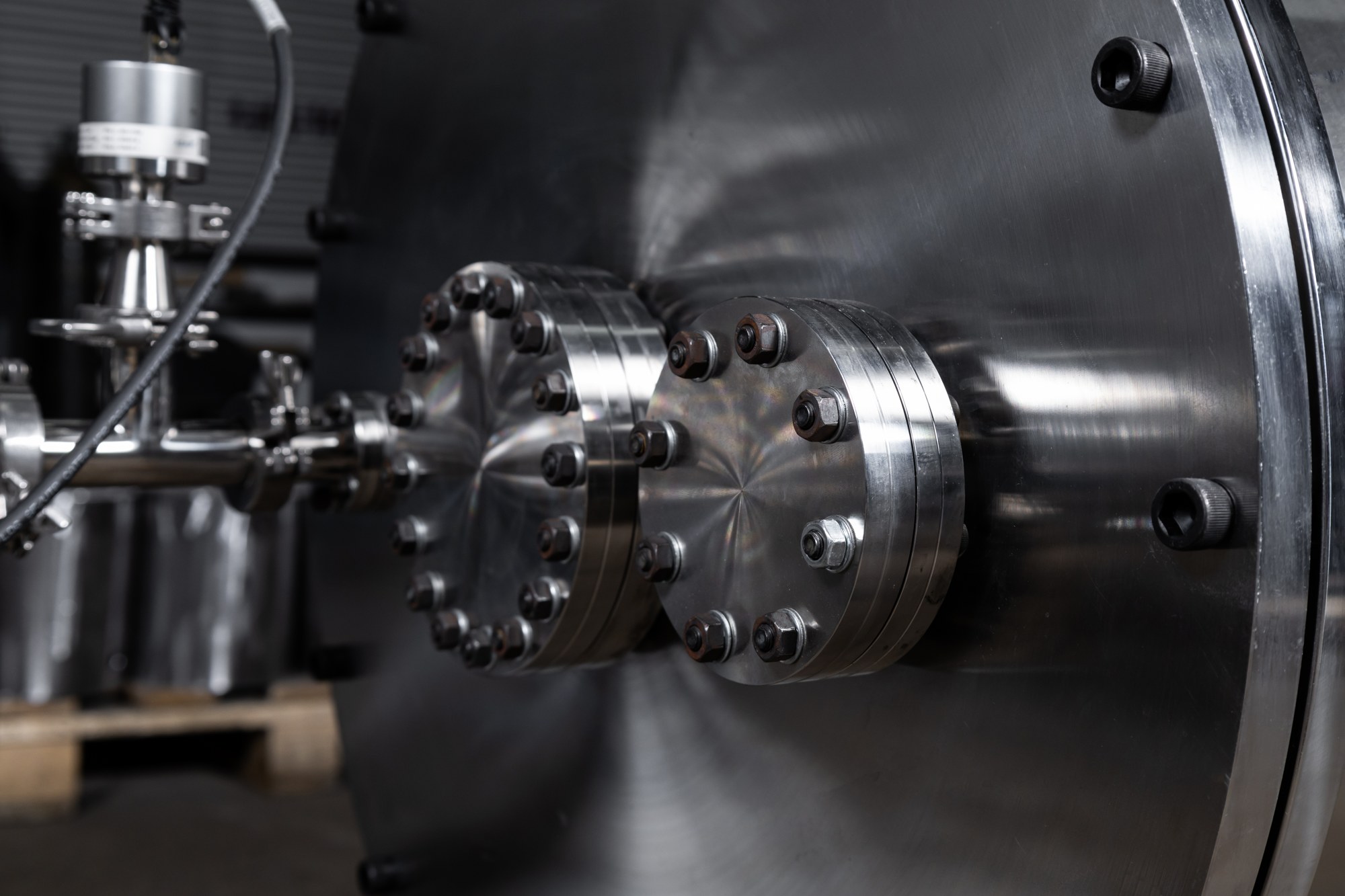
| High-vacuum ports | CF ports with copper gaskets. Loading-door seals and other connections are assessed separately. |
| Backing pump | CBVAC SSH20 dry twin-screw pump in the described configuration; compatibility with the selected turbomolecular pump is checked during design. |
| High-vacuum stage | Turbomolecular pump; model, bearings, cooling and pumping speed specified for the project. |
| Pressure measurement | LeakLab AGP4000, Pirani and cold-cathode principles. Manufacturer-stated range: 1×10⁻⁶ to 1×10⁵ Pa for air and nitrogen. |
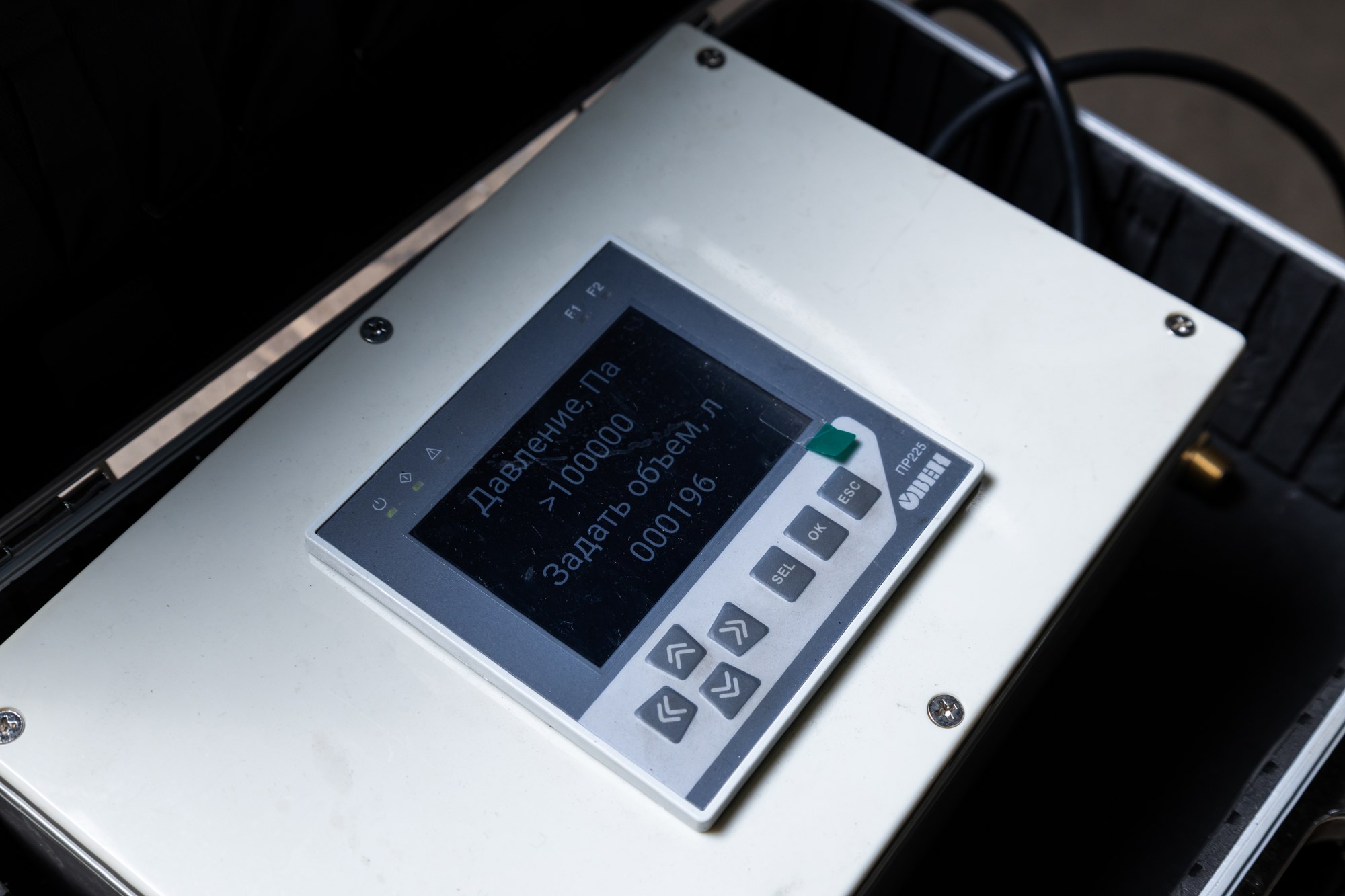
| Control | OWEN PR225 programmable relay with an application-specific sequence and interlocks. |
| Documentation | Chamber and system test records against agreed acceptance criteria. |
Chamber construction and vacuum connections
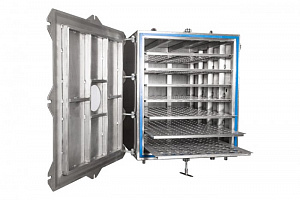
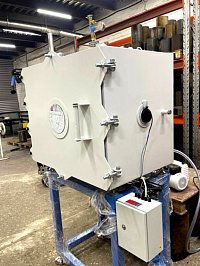
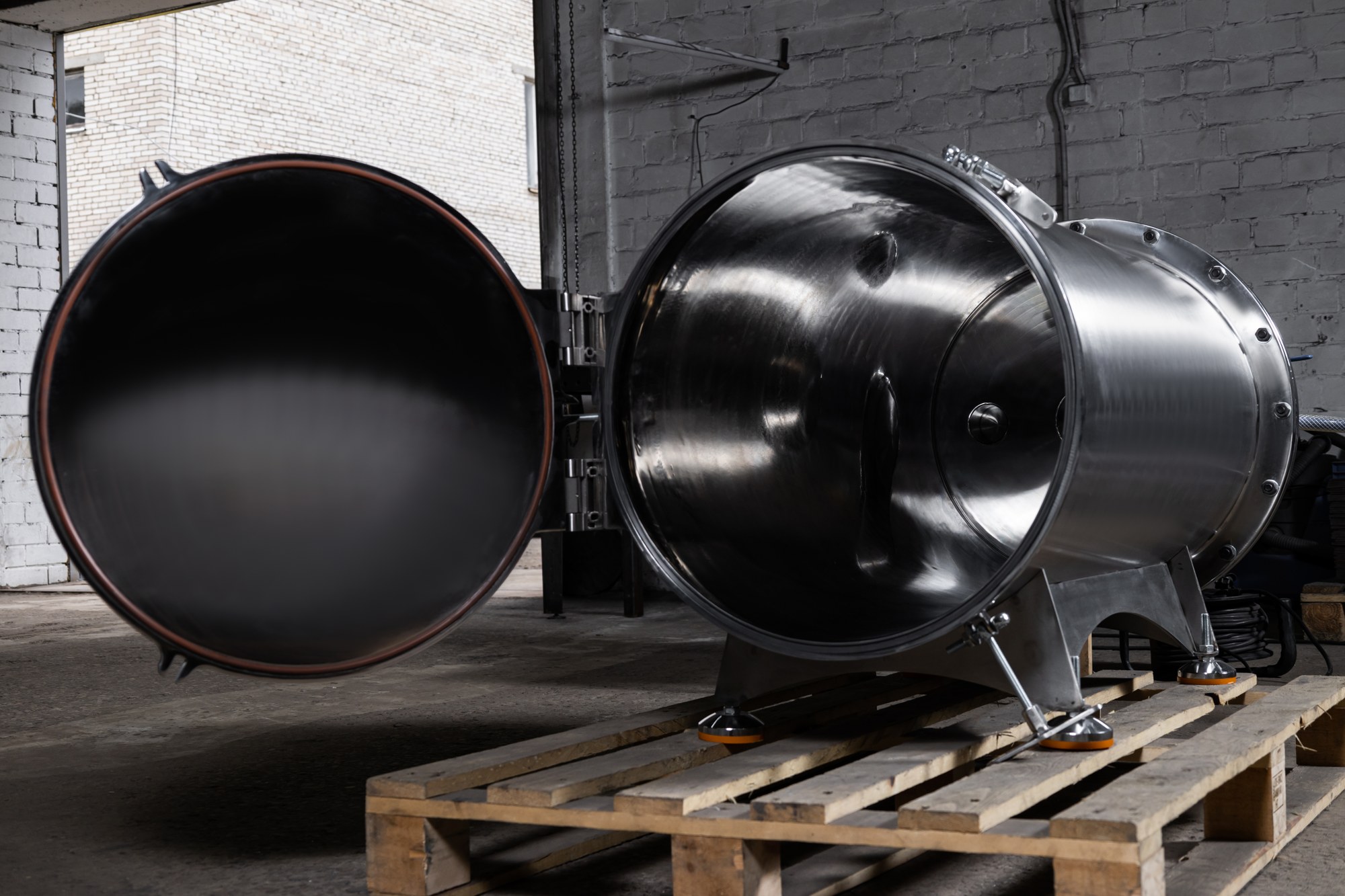
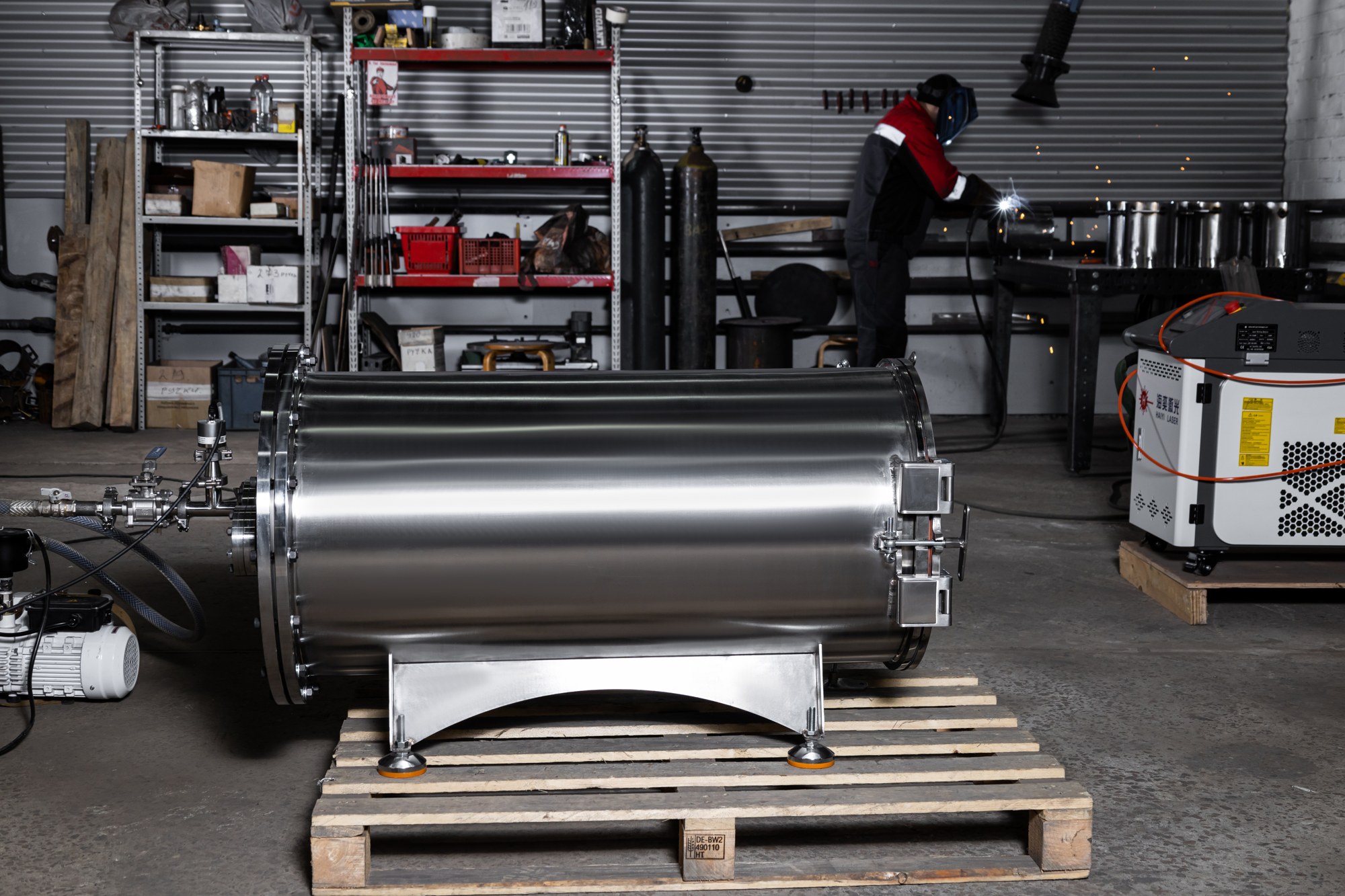
The cylindrical body is supported on a frame and fitted with a hinged loading door. The arrangement provides access for loading specimens, cleaning and servicing fixtures. The clear working envelope is agreed from a drawing, rather than inferred from the nominal chamber dimensions.
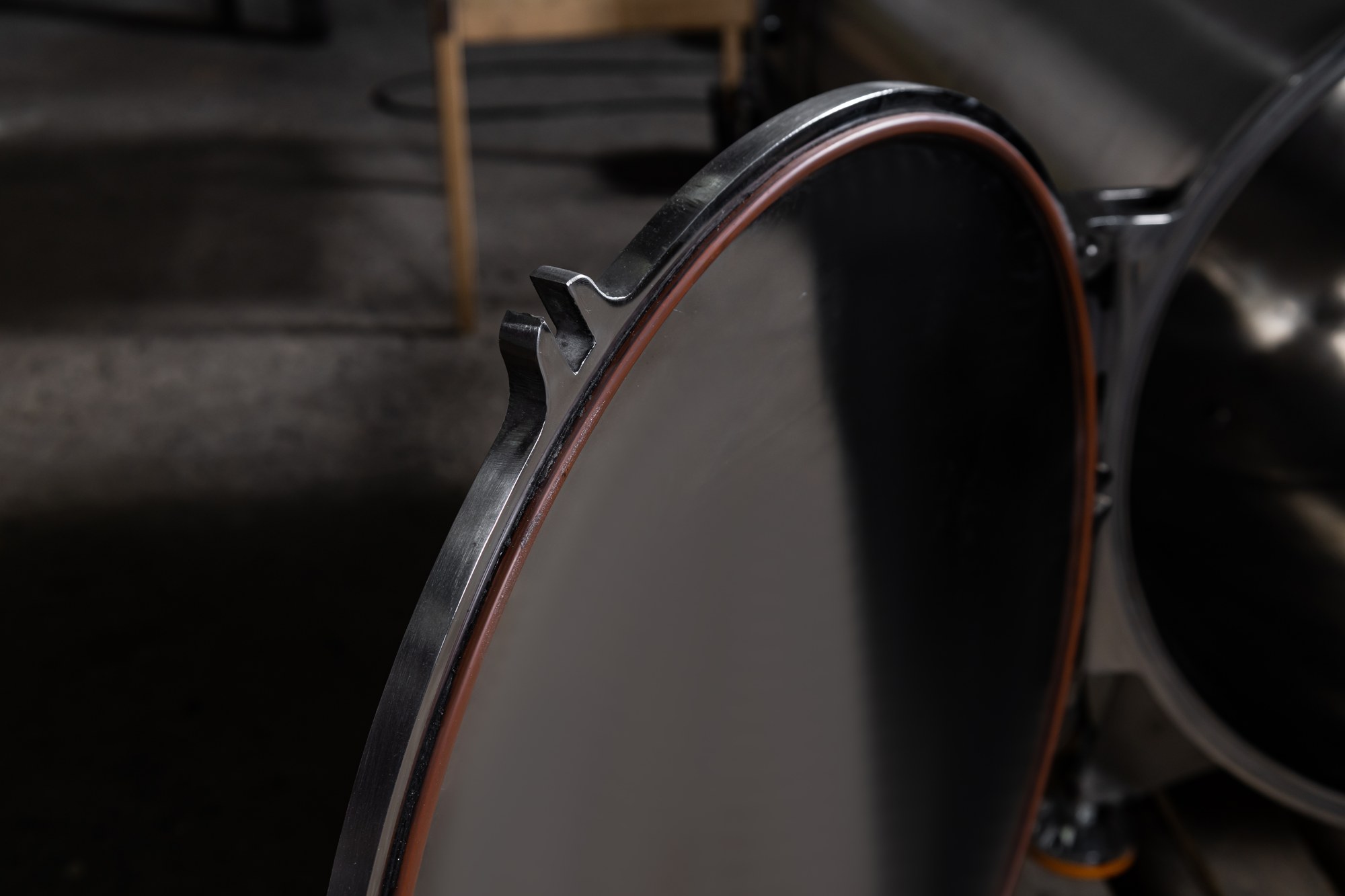
CF seals use deformable copper gaskets. The gasket is replaced after opening and the sealing edges must be kept clean and protected. The loading-door O-ring and clamp connections are separate sealing systems: CF ports do not make every connection an all-metal seal. The permissible bakeout temperature depends on every installed component.
Fabrication, assembly and acceptance
Design starts with specimen dimensions and materials, permissible loads, target pressure and the test method. The chamber body, door, flanges and supports are designed for external atmospheric loading during evacuation. A vacuum rating does not authorise arbitrary internal overpressure.
After fabrication, the chamber is cleaned and inspected, followed by leak testing of the body and connections. System commissioning then checks pumping, measurement and control as an assembled system. Acceptance records identify the configuration and preparation conditions under which the agreed values were demonstrated.
Dry pumping and turbomolecular integration
The described SSH20 dry screw pump performs roughing and backs the high-vacuum stage. Its published ultimate pressure is around 1 Pa under the pump test conditions; this is neither a guaranteed pressure in a loaded chamber nor a universal switching setpoint. Chamber and backing-line pressures represent different points in the system.
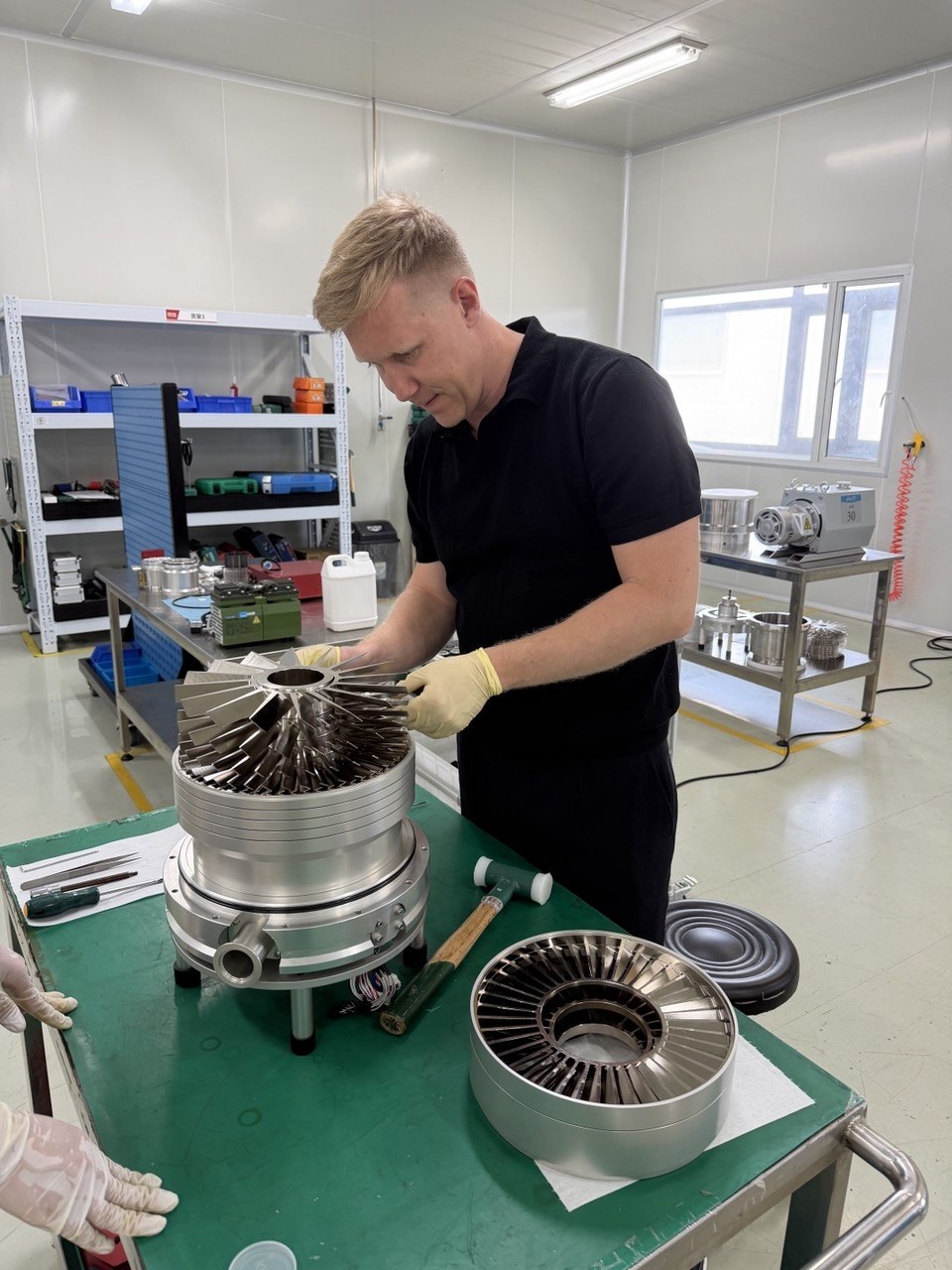
The turbomolecular pump transfers momentum from rapidly moving blades to gas molecules and requires continuous backing. Selection must consider pumping-speed curves, gas load, allowable backing pressure, cooling, mounting and stopping conditions. A larger pump cannot be substituted without reviewing the backing capacity and controls.
Dry pumping means that oil is not used as the working sealing fluid in the gas path. It does not eliminate gearbox or bearing lubrication. SSH20 gearbox oil and lubricated turbomolecular bearings are serviced according to their respective manuals.
Pressure measurement and control
AGP4000 combines Pirani and cold-cathode measurement. Its documentation gives nitrogen accuracy of ±30% of reading and repeatability of ±5% of reading. Gas dependence, mounting location, contamination and calibration status must be considered when interpreting the system pressure. A reading at the lower range limit requires an appropriate acceptance decision rule.
The instrument provides KF25 connection, a 0–10 V analogue output and RS-485 Modbus RTU communication. An RJ45-style connector does not imply an Ethernet interface. Wiring and signal conversion follow the exact instrument manual.
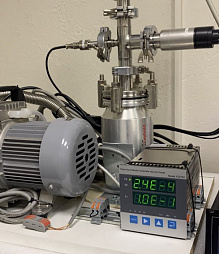
PR225 processes instrument signals and controls the specified sequence. Pump-start permissions, valve states, venting and protection functions are established for the actual installed equipment. Photographs of an early test display do not establish the final high-vacuum performance.
Leak testing and result interpretation
Pressure rise, residual pressure and helium throughput are different quantities. In a pressure-rise test, Q = V·dp/dt only describes the measured gas load under the stated conditions; outgassing and trapped gas can contribute. Helium testing requires a suitable detector connection, background stabilisation and a reference-leak response check in the working configuration.
The method, tracer-gas concentration, pressure difference, response time and acceptance threshold are agreed before testing. If throughput near 1×10⁻¹¹ Pa·m³/s is required, that requirement belongs in the verification programme for the complete measurement arrangement.
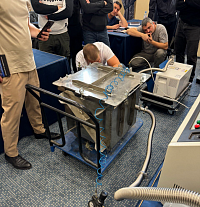
Photographs from fabrication and initial testing
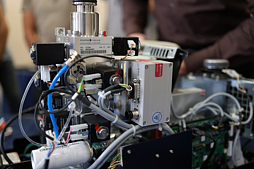
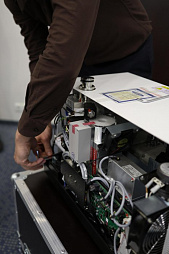
These photographs document the chamber and early inspection work. They are not a specification of the current demonstration pump package.

Commissioning, service and training
LeakLab can supply a complete system, selected components or integration into an existing process. Scope can include chamber leak testing, commissioning, pump and gauge service, operating instructions and personnel training at the laboratory or customer site.
To discuss a demonstration or quotation, send specimen dimensions and materials, target pressure, test method, acceptance criterion, gas load, throughput and site constraints.
Discuss a D500 L1000 system